
Safe spaces to listen and be heard
Bridges for Communities facilitate face to face spaces, to encourage intentional listening and conversations between people of varying backgrounds, that might include culture, faith, class or political views.
“Conversations and narratives on many topics are increasingly polarised, and the art of listening to people we disagree with is fading. It’s all too easy to depend on our social media feeds and stay within our bubble, casting judgement on those who see things differently.”
Bridges for Communities believe in spaces where we understand each other by listening, we might not agree but we can respect each other. Making us better to “equipped to live well with difference”. Increasingly, opinions can feel polarised and difficult to understand if they are different from our own views.
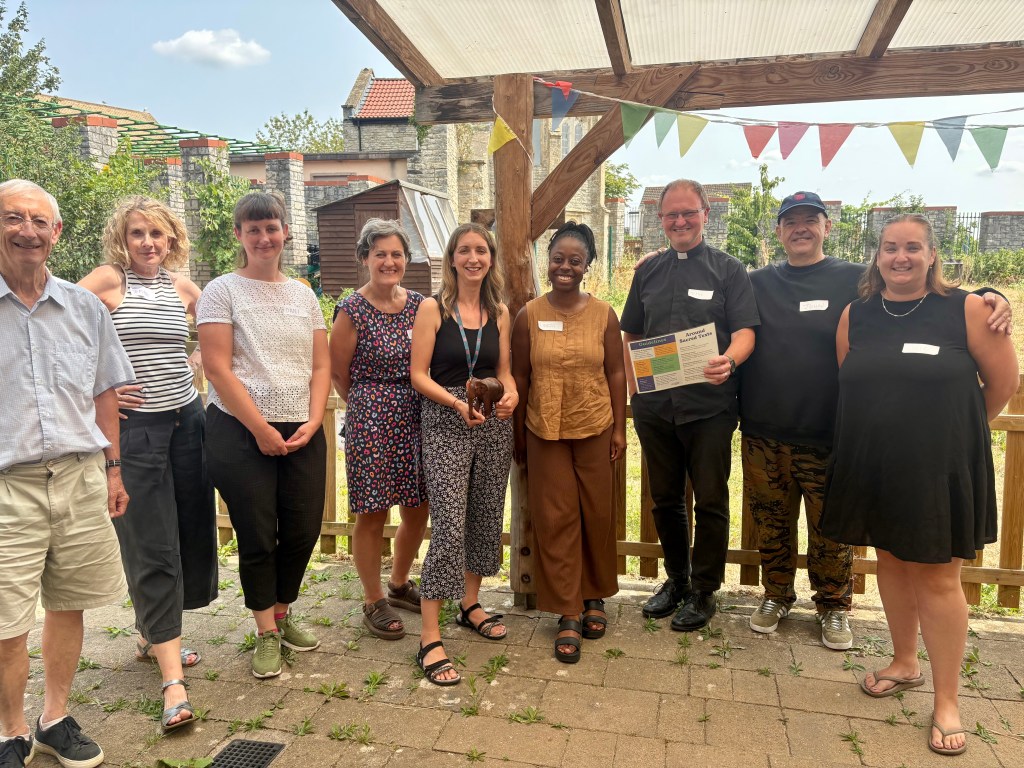
In mid-July a group made of up of people working and living in Knowle West met with Bridges for Communities or a workshop to understand how listening spaces work in practice. Our topic was “What does leadership mean to us?” We wanted to understand how Listening spaces work in practice.
Listening Spaces operate with intentions and guidelines which encourage people to be kind and respectful, honest, non-judgemental, learn together, find common ground and stay in the conversation even when it feels hard.
The session in Knowle West
To begin, we were given a question and we voted on two possible answers. This was the basis for our opening discussions, a simple way to introduce a topic, encourage thoughts. Next, working in pairs, we moved to explore the topic in more depth. Initially each pair chose questions, then in different pairs we explored the questions that hadn’t been picked in the first selection, the more challenging questions. From pairs we moved into a whole group discussion, sharing our views and opinions. This was an exercise is giving everyone room to be heard, gently facilitated by Leeza from Bridges for Communities.
The question: What does leadership look like in your community setting?
Thinking about Listening Spaces in Knowle West, there was a discussion about local leadership. The group highlighted different examples of leadership locally and based on roles, history, settings. There was an acknowledgement of the barriers that might stop people stepping into a leadership role. We went on to talk about what makes effective leadership and how to be manage conflict well.
How do we create listening spaces locally?
The group agreed that spaces at St Barnabas and Boing are local places which are both welcoming and non-judgemental places.
A listening space isn’t about changing hearts or minds, it is a space to learn and understand one another. How do we make it accessible and inviting? What language to we use to frame it? Where do we hold the spaces?
In setting up a listening space, Bridges for Communities suggest making guidelines for the space clear, so that everyone feels safe and knows that their voice and opinion will be heard and valued (Bridges have a set of guidelines). There has to be some agreement to make progress, and that comes from the willingness of participants to share, remain claim, listen and learn from one another.
Reflections from trying a Listening Space
As a group, we agreed that it was valuable making time to reflect on a topic and explore it in depth. The opportunity to actively listen to others was valued. We acknowledged there is always a range of views in a group.
The Elephant
Additional tools in a Listening Space, to encourage thought, include a chair left deliberately empty to represent people not in the room. There are many people who won’t be in the room, for many reasons. The empty chair, prompts a space to acknowledge that, think about who those people might be and their whys. To reflect on who and what are the missing voices?
Leeza from Bridges bought along a wooden elephant, “the elephant in the room” – that subject or obvious issue that is more difficult to address, it is there but no one wants to address it. The wooden elephant reminds us to face the more awkward and challenging issues.
We recognised that as a group we hold similar views, and came with willingness to participate in the workshop, we already had common ground and the benefit of knowing each other, together with the the subject not being contentious. Getting the right people in the room present challenges.
We agreed that it was valuable to take the time to explore a topic in depth. The questions were interesting and challenging and the structure of working in smaller groups/pairs and then coming back as a bigger group, worked well. We need to think about the limits of discussions that we have and what could be divisive and unhelpful. The elephant and spare chair can be useful tools to introduce more difficult subject matter.
If you’d like to know more get in touch with Bridges for Communities directly or contact KWA to talk more about creating local listening spaces.

